By Laura Ringo | Posted on December 6, 2017
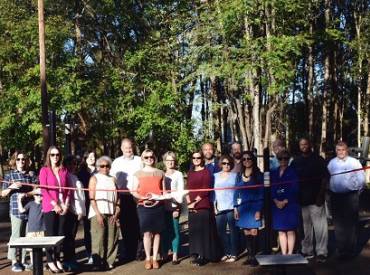
One of Spartanburg's most popular recreation and physical activity destinations is the Mary Black Foundation Rail Trail. This two-mile rail-to-trail conversion is a wheelchair accessible recreation and activity hub that parallels two major roads and connects many neighborhoods to downtown Spartanburg, South Carolina.
By Philip Vitale, Katrina Ortiz, Kate Robinson, Fernando Pujals | Posted on August 21, 2017
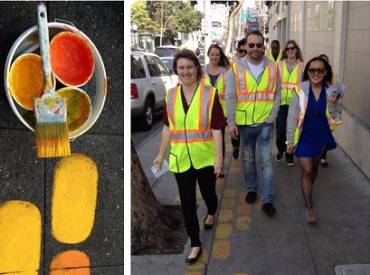
San Francisco recently commemorated the great success of being the first city in the nation where every resident lives within a 10-minute walk to a park. It is, indeed, a great feat worth celebrating. But not every 10-minute walk is the same.
By Desiré DeGrange | Posted on February 24, 2016
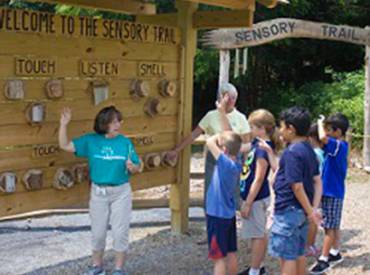
Nestled in western Maryland is a nature park that is one of Frederick County’s true jewels. Catoctin Creek Park captures the imagination of visitors every day as guests enjoy not only historical elements in this one hundred and thirty-nine acre park, but also miles of trails and the County’s newest green energy efficient nature center.
By National Physical Activity Society | Posted on November 23, 2015
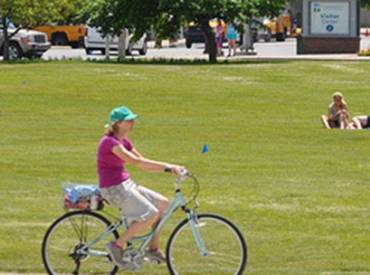
Stories from Small Towns is a project of the National Physical Activity Society. The objective of the project is to demonstrate that structural changes to make walking easier can be carried out in America’s thousands of small towns and not just its big cities. The project focuses on advice from towns that have made some changes, with the aim of inspiring town leaders across the country to see such infrastructure as possible and worthy. The following are stories from small towns that have focused on parks as a key to walkability.
By Doug Guild | Posted on November 19, 2015
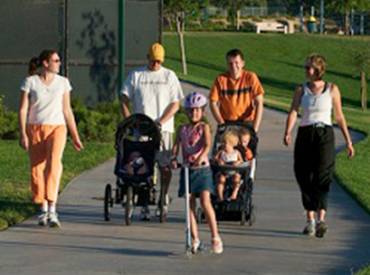
Almost 70 percent of Henderson, Nevada residents live within a half-mile of a park or recreation amenity—the equivalent of just two laps around a track. With so many parks and trails within walking distance, Henderson residents have a unique opportunity to participate in outdoor experiences right in their own neighborhoods.
By Jennifer McClintock | Posted on July 17, 2015
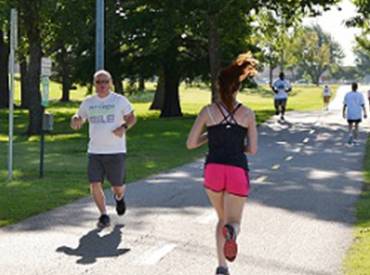
In 2006, a national magazine declared Oklahoma City one of the fattest cities in the United States. That spurred Mayor Mick Cornett into action, first by losing 38 pounds on a diet based on sensible eating and exercise, then by launching a campaign to help his city lose one million pounds. “There’s no other way to put it, we were overweight,” Cornett said. “I knew if I wanted to encourage change in our citizens, I had to first change myself,” Cornett said. The campaign ignited local leadership to reshape how the city needed to change in terms of walkability and citizen fitness.
By National Recreation and Park Association | Posted on January 8, 2013
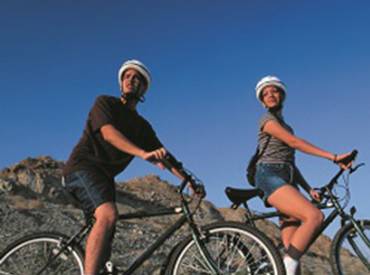
Increasing physical activity is attributed often to two things: access and knowledge. For San Antonio, Texas, there is a third factor—collaboration—and it is changing the way residents are getting, and staying, active throughout the city.

By National Recreation and Park Association | Posted on January 8, 2013
A collaborative group of local leaders in Pierre implemented a program for physicians to provide “wellness prescriptions” to their patients – children, adults, and the elderly. One tangible part of this program was a physical map of all outdoor recreation activities available in and around the city.
By National Recreation and Park Association | Posted on January 8, 2013
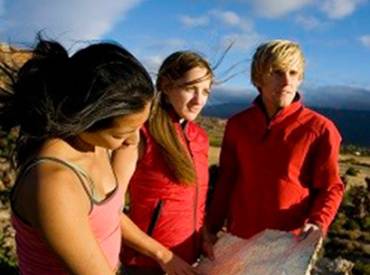
Engaging in physical activity can be a challenge in rural areas, where sidewalks are scarce, fitness facilities are limited, and there’s little access to public transportation. In western Pennsylvania, many residents are confronted with this issue on a daily basis.

By National Recreation and Park Association | Posted on January 8, 2013
Louisville, Kentucky, Metro Parks is working with local and national partners to develop a 100-mile trail system that will encircle the city—linking parks and neighborhoods to civic and cultural attractions, and providing healthy transportation options for residents. The project is a centerpiece of Louisville’s CITY OF PARKS initiative, launched in the mid-2000s to expand and improve parkland and environmental education.

By National Recreation and Park Association | Posted on January 8, 2013
Kauai, Hawaii, is engaging in extensive efforts to address a decline in health of local residents due to sedentary lifestyles and unhealthy eating habits. As part of the Mayor of Kauai’s vision to encourage and promote physical activity, the Kauai Parks and Recreation Department is collaborating with the Kauai District Health Office, Kauai Path, Inc., and a collection of other organizations—local, county, and federal—to develop Ke Ala Hele Makalae, a coastal multi-use path for biking, walking, and running.
By National Recreation and Park Association | Posted on January 8, 2013
Imagine running with your preschooler in a jogging stroller on a long path that winds along a beautiful, tree-lined river. Suddenly, your reverie is broken by a small voice “Daddy, I have to go to the bathroom.” You are stunned – you have no idea where to find a bathroom and you are not carrying toilet paper.
By National Recreation and Park Association | Posted on January 8, 2013
Most cities vie to be “first” in something, but when Corpus Christi, Texas was named the “Fattest City in the United States” in 2010 by Men’s Health Magazine, city leadership sought to quickly shed the pounds (and the title) by establishing a Mayor’s Fitness Council to promote healthier lifestyles.

By National Recreation and Park Association | Posted on January 8, 2013
When a group of civic leaders in the City of Hastings, Nebraska, decided to develop an infrastructure of sidewalks and trails to encourage walking and biking, they ended up with an education in planning, zoning, and engineering. This group included city council members, the mayor, public employees, local businesses representatives and leadership from local non-profit organizations. They liked the idea of “Complete Streets” – making streets accessible to walkers, bikers and public transportation users as well as cars.
By National Recreation and Park Association | Posted on January 8, 2013
A notable feature of the Mid-Ohio Valley region of West Virginia is the vast collection of trails that wind through the area. The North Bend Rail Trail, American Discovery Trail, and network of trails along North Bend State Park are well-known destinations for hiking, biking, and family outings for thousands of people.

By National Recreation and Park Association | Posted on January 8, 2013
Sometimes it takes a physical path to help all the pieces come together for a healthier community. The 52-mile Great Miami River Trail has become a cornerstone for Miamisburg, Ohio as they seek to impact chronic disease within their city.

By National Recreation and Park Association | Posted on December 8, 2013
Sugar Land, Texas, is a fast-growing planned community in the Houston suburbs—a place where developers incorporated trails, along with other amenities, into subdivisions as they were built. In 2007 Sugar Land’s parks and recreation department examined that resulting network of neighborhood trails and developed a hiking/biking master plan to connect those many miles of trail infrastructure into a citywide system accessible to all residents.

By National Recreation and Park Association | Posted on January 8, 2014
An ailing economy meant fewer resources for pathway upkeep along Miami-Dade County trails. One trail system in particular that became overgrown and impassable meanders through a 50-acre natural hardwood hammock preserve — a canopied forest unique to Florida — within the 116-acre Kendall Indian Hammocks Park, a regional park located in a densely populated area. - See more at: http://staging.nrpa.org/success-stories/?pg=9#sthash.GkxYFV5D.dpuf